The EU Paradiplomacy Project Reaches Its Final Milestone: Final report is now published and avialble for download
With the completion of the EU Paradiplomacy project, the Coppieters Foundation concludes a research initiative that, over the past years, has brought together an international network of scholars to explore the evolving role of regions and other sub-state governments in European and international affairs.
Paradiplomacy describes the growing involvement of regions and sub-state governments in international relations. As regional authorities increasingly engage with European institutions and international partners on issues ranging from economic development and climate action to culture and democracy, understanding their role has become increasingly relevant within the European Union’s system of multilevel governance. Against this backdrop, the initiative examined how regional governments develop their external action and interact with the European Union through a comparative analysis of regions inside, outside and in transition within the EU.
Alongside its research activities, the initiative created several opportunities for academic exchange and collaboration. One of its first major milestones was the Scientific Meeting: Between Cooperation and Conflict: Explaining Strategies of Regional Paradiplomacy towards the EU in Regions Inside, Outside and in Transition, where members of the research consortium presented their initial findings, compared case studies and discussed the different patterns of regional mobilisation towards the European Union.
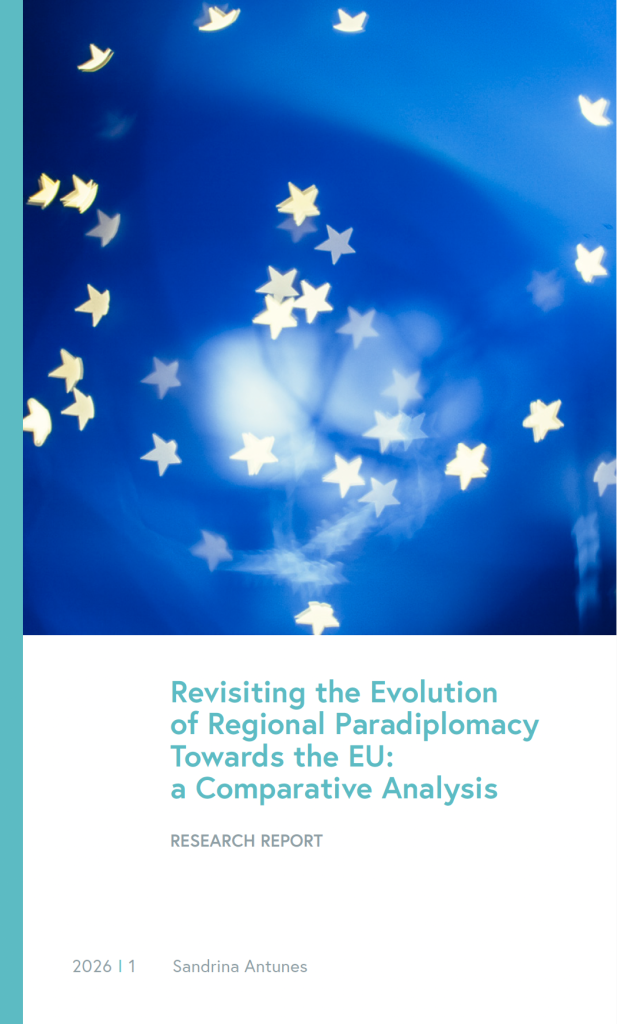
Over the years, the consortium has produced a rich collection of publications reflecting the breadth of the research carried out throughout the initiative. Beginning with Paradiplomacy, which introduced the conceptual framework underpinning the research, the consortium went on to publish books, academic articles and comparative studies that have helped advance the debate on paradiplomacy. Among the most significant outputs are Between Cooperation and Conflict: Strategies of Regional Mobilization towards the EU and Revisiting the Evolution of Regional Paradiplomacy towards the EU: A Comparative Analysis, which offer new perspectives on the relationship between regional governments and the European Union and contribute to a deeper understanding of regional mobilisation in Europe.
The initiative culminated in the Policy Reflection and Networking Workshop on Paradiplomacy, where members of the research network came together to discuss the consortium’s conclusions and their implications for policy and governance. The workshop explored the drivers of cooperation and conflict between different levels of government, reflected on the challenges of multilevel governance, and identified new avenues for future research and collaboration, reinforcing the dialogue between academia and policymaking.
Although the initiative has now concluded, its publications and research outputs remain freely accessible through the project publications page. Together, they provide a valuable resource for researchers, students, policymakers and anyone interested in regional governance, democracy and the international role of regions.
The Coppieters Foundation would like to express its sincere gratitude to Sandrina Autunes and Jordi Matas Dalmases for the leadership and scientific coordination throughout the initiative, as well as to all the researchers, partner institutions and contributors whose expertise, commitment and collaboration made this work possible. Their efforts have significantly advanced the study of paradiplomacy and will continue to inform future research and discussions on the role of regions in Europe’s evolving system of multilevel governance.
. . .
This project is an initiative of Coppieters Foundation.
. . .
This project is financially supported by the European Parliament. The European Parliament is not liable for the content of the event nor for the opinions of the speakers.
. . .
Photo by Magnific / Freepick